Sunday, November 27, 2022

Refurb weekend: Sega Dreamcast

Remember when consoles weren't glorified PCs? The 1999 Sega Dreamcast remembers. Sega's final console and introduced on "9/9/99 for $199" before the Sony PlayStation 2 hype machine overwhelmed it, it came on the heels of the Saturn, which had sophisticated hardware but was difficult to program and Sega lost millions on manufacturing them. In some ways the Dreamcast is the Saturn done right: the same SuperH architecture, just way faster (instead of dual SH-2s at 28.6MHz, one big SH-4 at 200MHz), a more conventional GPU (rather than the odd 3D VDP of the Saturn which used quads instead of triangles), and a straightforward uniprocessor design instead of the Saturn's sometimes rickety dual CPU bus. It was also much cheaper to manufacture even considering its use of the Yamaha GD-ROM format; nothing else supported it, but it stored up to a gigabyte and was backwards compatible with CDs.

However, the Dreamcast was also not very future-proofed as it was the only fifth-generation console not to use DVD format (even the "mini" discs of the GameCube stored more), and Sega's attempt to outrun Sony and Nintendo's new offerings with deep discounts only served to make the console unprofitable faster. Sega announced the discontinuation of the Dreamcast on March 31, 2001, and slashed the cost to $99. I'd heard good things about it, I'd played Crazy Taxi in the arcades, and there it was at Fry's (rest in peace) at a price I could afford as a starving student, so I picked one up. Games turned up in quantity at lower prices and I even managed to land a Broadband Adapter and a keyboard and a light gun and a mouse and the Seaman microphone and even the fishing reel controller. There's also an SD card reader plugged into the back expansion port I can play disk images off.

Although I've picked up a couple other Dreamcast and Dreamcast-adjacent systems since, I still have the original one in my office. Its internal battery used for storing settings had long since worn out, requiring me to enter the date and time every time I wanted to play a game, but then it wouldn't read any discs other than SoulCaliber. I mean, I like SoulCaliber, but this was ridiculous. No Crazy Taxi? It's time for ... a Refurb Weekend!

... after we play a game of SoulCaliber.

Saturday, November 12, 2022

Meet your new two-factor authenticator: your Commodore 64

Multi-factor authentication is ripe for disruption. SMS 2FA is inherently defective. Phone authenticators get stolen. Security tokens get lost.

But just try misplacing a Commodore SX-64. And any thief who tries to grab it and run gets a free hernia truss from the prison infirmary:

Plus, I've got a colour for every key!
And it actually works:
The terminal window is showing a generated time-based one-time password for a full key, and the emulated 64 is showing the correct key, at the correct time, which was known and tested to be valid. Yes, you really can use your Commodore 64 for multi-factor authentication to generate TOTP codes!

Sunday, November 6, 2022

Running a pinball game from a disk image doesn't make me a pirate

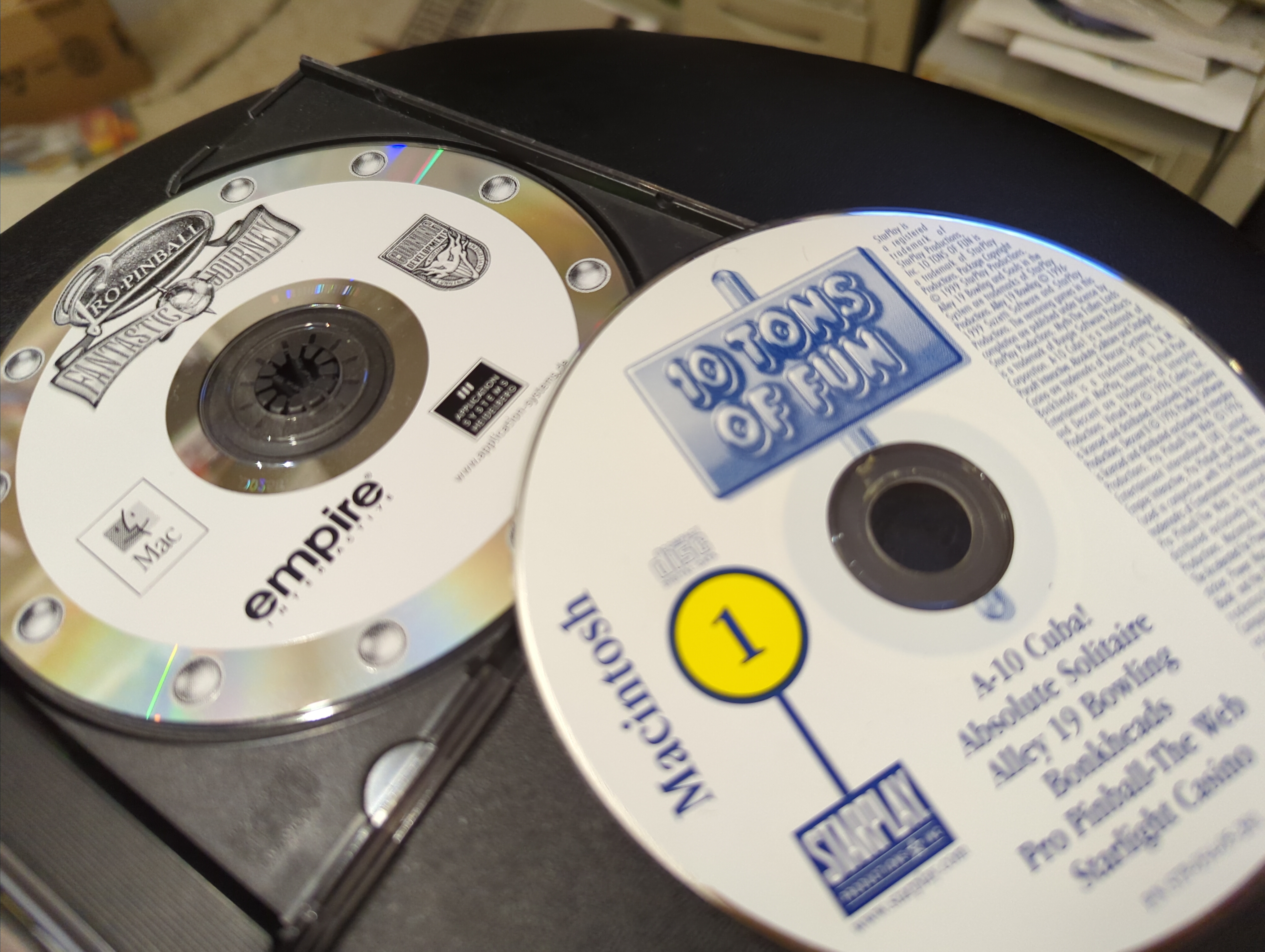
I like pinball; I have a Williams Star Trek: The Next Generation and a Stern Sopranos machine in my house. (As it happens, the Sopranos machine is consistently more popular with guests as the ST:TNG machine tends to be a drain monster.) But computer pinball games were usually iffy due to substandard physics until around the mid nineties. One of the finest of those early releases are the Pro Pinball games; they easily had the best gameplay and graphics, and despite being synthetic were nevertheless plausible machine designs instead of some of the fanciful crap you get nowadays. They were all ported to the classic Mac and I own the lot. Here are the first and last, Pro Pinball: The Web and Fantastic Journey.
I'm making a point of saying I own these and showing you I do, because none of the Pro Pinball titles will play without the CD mounted. For The Web, which I have here as part of the 10 Tons Of Fun compilation pack released by StarPlay, and Timeshock this makes sense because the music tracks are regular redbook audio and play directly from the CD. But this was not the case for Big Race USA nor my personal favourite Fantastic Journey: near as I could determine, the CD requirement was only to make sure you owned the disc. I could certainly dupe it and play from a burned copy, and that's what I did, but I ought to be able to install the game and not need the disc at all. As always copy protection only inconveniences legal owners and never deters the pirates.

In this case it didn't deter them either, because I became aware of a crack for Big Race USA that will happily play the game from a CD image. My "gaming" classic Mac is a Power Macintosh 7300 with a 800MHz Sonnet G4, an ATI Rage Orion (a Mac-specific 16MB Rage 128GL which has fewer compatibility problems with older games than the Radeons), a gig of RAM and two 18GB SCSI drives. That's more than enough space to save disk images for games and most of the games (that don't require redbook audio tracks) play from one, which is both faster and less wear on the optical drive. Big Race USA and Fantastic Journey both refuse to.

The Web runs a unique executable, but the others use a more or less common runtime. This gave me hope that Fantastic Journey could be broken in the same way that Big Race was. Let's have a look.

Saturday, November 5, 2022

Refurb weekend: Commodore SFD-1001

The Commodore SFD-1001 is an oddball and a rarity even among Commodore IEEE-488 5.25" floppy drives, which nowadays aren't particularly common either (though my preferred IEEE-488 device is the MSD Super Disk Drive SD-2, which also conveniently has IEC serial). The SFD "Super Floppy Drive"-1001 is a low-profile single drive version of the CBM 8250 dual drive and stores a whopping 1MB per disk, which when the series was introduced in 1980 was really quite something. Unfortunately it requires 96tpi double density "quad density" floppies to do it — not the 48tpi double density disks you'd feed a more typical 1541 or 1571, nor the 96tpi high density PC floppy drives use — so there wasn't a whole lot of megabytes to store into even when these drives were newer. I also have a CBM 8050 which is the single-sided (but still dual drive) version of the 8250; it can store roughly a cool meg too but you have to flip it over for the second half.

This SFD came to me from a seller who said while it powered on it also made a weird noise and he had trouble inserting disks. Nevertheless, it's still an odd enough duck it was worth buying to see if it was repairable. We have an extra hour this weekend from the daylight savings change, so let's crack this sucker open.

Sunday, October 30, 2022

If one GUI's not enough for your SPARC workstation, try four

Who needs a jack-o-lantern when you've got a bright orange gas plasma display?
This is a 1990 Solbourne Computer S3000 all-in-one workstation based around the 33MHz Panasonic MN10501, irreverently code-named the Kick-Ass Processor or KAP. It is slightly faster than, and the S3000 and the related S4000 and later S4000DX/S4100 directly competed with, the original gangsta 1989 Sun SPARCstation and SPARCstation 1+. Solbourne was an early SPARC innovator through majority owner Matsushita, who was a SPARC licensee in competition with Fujitsu, and actually were the first to introduce multiprocessing to the SPARC ecosystem years before Sun themselves did. To do this and maintain compatibility, Solbourne licensed SunOS 4.x from Sun and rebadged it as OS/MP with support for SMP as well as their custom MMU and fixes for various irregularities in KAP, which due to those bugs was effectively limited to uniprocessor implementations. Their larger SMP systems used Fujitsu (ironically), Weitek and Texas Instruments CPUs; I have a Series5 chassis and a whole bunch of KBus cards Al Kossow gave me that I've got to assemble into a working system one of these days.

This particular machine is a fairly upgraded unit thanks in large part to Stephen Dowdy, formerly of the Solbourne Shack and the University of Colorado, where he maintained them. In particular, besides tons of OS stuff and documentation, the SBus RAM expander card giving this machine a total of 56MB ECC RAM came from his old S3000, and it also has a SCSI2SD along with a 256K L2 cache CPU module stolen from an S4100. The 1152x900 monochrome display is compatible with the SBus bwtwo. Just like I retain a great fondness for PA-RISC because it was my first job out of college, I have similar affection for Solbournes because one of my first undergraduate Unix accounts was on a department Series6.

KAP was an interesting processor with a great name, but its sometimes serious issues more or less directly led to Solbourne's demise as a computer manufacturer because Matsushita wouldn't let them walk away from its sunk design costs. Still, it was good competition when it was new and OS/MP was nearly 100% compatible with SunOS 4.x (4.1C, the final release, is equivalent with SunOS 4.1.3), so what you're really looking at is a SPARCstation "clone" of sorts with the hottest display this side of a Al Gore climate chart.

And it turns out that particular computing environment was really the intersection point for a lot of early GUI efforts, which were built and run on Sun workstations and thus will also run on the Solbourne. With some thought, deft juggling of PATH and LD_LIBRARY_PATH and a little bit of shell scripting, it's possible to create a single system that can run a whole bunch of them. That's exactly what reykjavik, this S3000, will be doing.

Sunday, October 23, 2022

Battery Eliminator Bible: what's in that classic console AC adapter

This is hardly exhaustive, but I promised a list of amperage, voltage and polarity for the wallwarts with my classic game consoles here. I've included both the AC adapter's nominal rating and measured voltage with no load to give you an idea of tolerances, keeping in mind that electronics do age. However, please note that using this list is completely at your own risk: I take no responsibility for frying your machine if you wire it wrong or I measured it wrong. If the machine is highly valuable and it takes batteries, maybe you should just use batteries instead of taking a (small) chance on my competency. Last updated 22 January 2023

  • Allied Leisure Name of the Game (Electro-Mech Co. #1076): 5.5mm/2.1mm barrel jack, tip positive. This thing is a liar: the casing says 7.8V 30mA nominal, but I got a straight-up 6V on the multimeter. Works with both the Name of the Game I (A-100) and II (A-300).

  • Atari Pong Battery Eliminator (part# 4720/model# 4-0033-2): 1/8" TRS (3.5mm mono headphone) jack, tip positive, nominal 5.5V 100mA, measured 5.8V. However, 6V should be just fine, since it takes a total of 6 volts in batteries. Should work with all Atari Pong consoles (I use it with my Ultra Pong Doubles).

  • Atari VCS/Atari 2600 (part# C016353): 1/8" TRS (3.5mm mono headphone) jack, tip positive, nominal 9V 500mA, measured 14V. Advertised as compatible with Atari Video Pinball, Atari Stunt Cycle and Atari Tank II. Also works for the CX-2000 if you have one. ;)

  • Bally Astrocade. This is not detachable unless it was secondarily detached. Reading off my working wallwart, "blk-red grn-wht 85mA, 10.8VAC red-grn 1A, 7.5VAC." I'm not chopping it off to test it!

  • Coleco Telstar (model# 6041): 1/8" TRS (3.5mm mono headphone) jack, tip positive, nominal 9V 200mA, measured 10.6V. I use this very adapter with my Telstar Arcade and Telstar Gemini, but the box says it works for the entire Coleco Telstar range.

  • Commodore Type 708 AC Adaptor: 1/8" TRS (3.5mm mono headphone) jack, tip positive, nominal 6V 250mA, measured 6.7V. This was sold for the Commodore TV Game 3000H but should work with the TV Game 2000K.

  • Magnavox Odyssey 3000 (model# AH9026BK01): 2.5mm TRS (mono headphone) jack, tip positive, nominal 9V 100mA, measured 9.8V. I'm told this will work for most of the other Magnavox Odyssey series except the Odyssey2 and Odyssey 4000, and the Philips Odyssey 2001 and 2100 (and naturally any of the Videopacs).

  • Radofin SC8000 (model# 9100): 2.5mm TRS (mono headphone) jack, tip positive, nominal 9V 100mA, measured 10.1V. Likely works for other Radofin consoles like the SC4000.

Friday, October 21, 2022

Refurb weekend: PowerBook 1400

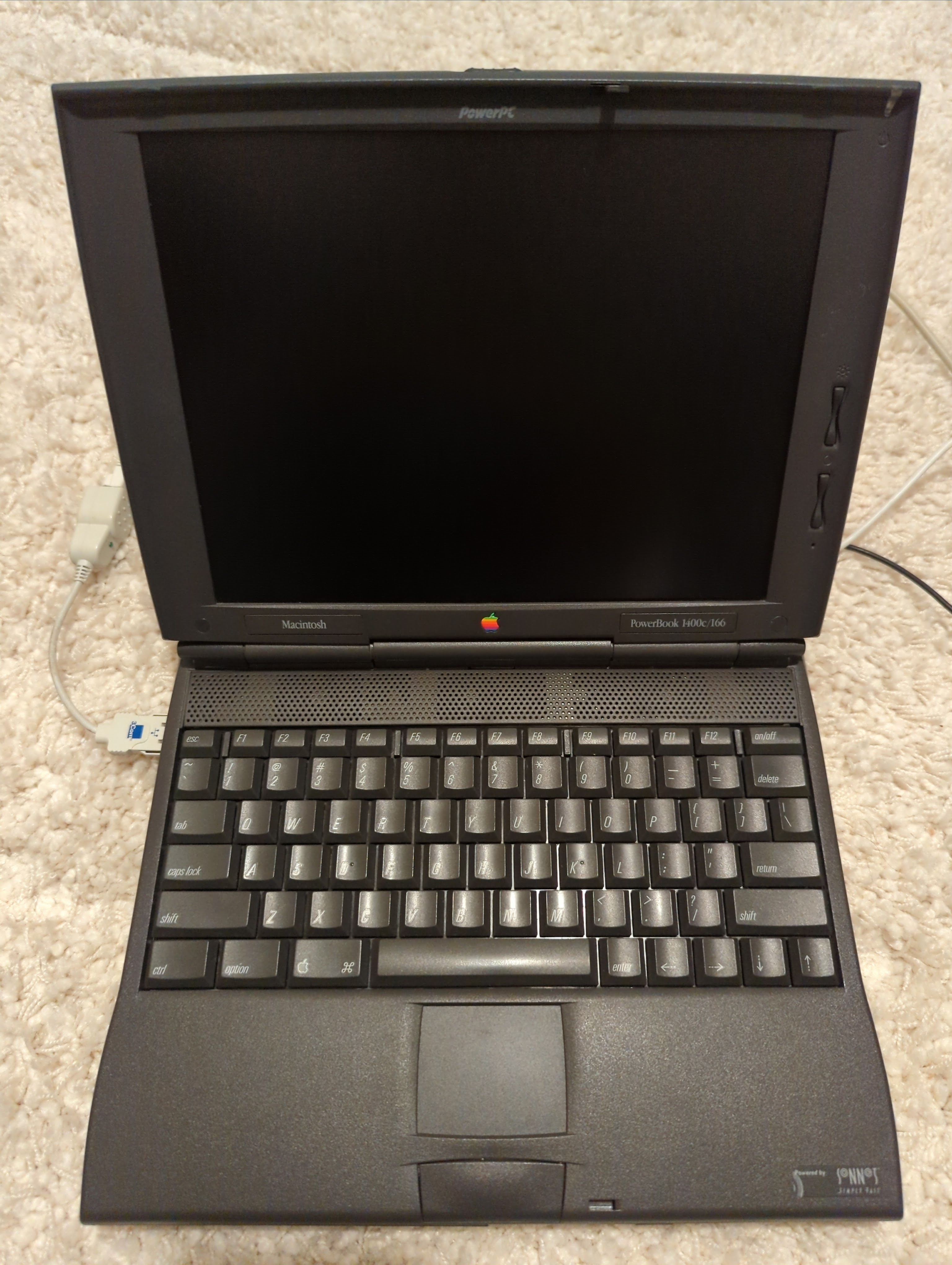
The PowerBook 1400 is, and remains, my favourite laptop. It was everything the PowerBook 5300 should have been and more. It was my first laptop, too, a hand-me-down from my sister's then-husband in 2001-ish who said if I could fix it, I could have it (a 1400cs/117 with a 117MHz PowerPC 603e). Only about four years old at that point, it turned out to need a new inverter board and a LCD, so I just bought it a new entire top half and installed it myself. I named it Benji. It ended up as my sole portable computer until I upgraded to a 12" 1.2GHz iBook G4 several years later.

It's that modularity (plus an exceptional keyboard) that makes the 1400 a particularly wonderful machine: over time I added a Sonnet 333MHz G3, extra RAM (the cs supports up to 60MB), a Apple 8-bit external video card and a 3Com EtherLink III PCMCIA NIC (which I hacked up a driver for), all on top of the 56K modem he installed and the floppy disk and CD-ROM drive bay modules it came with.

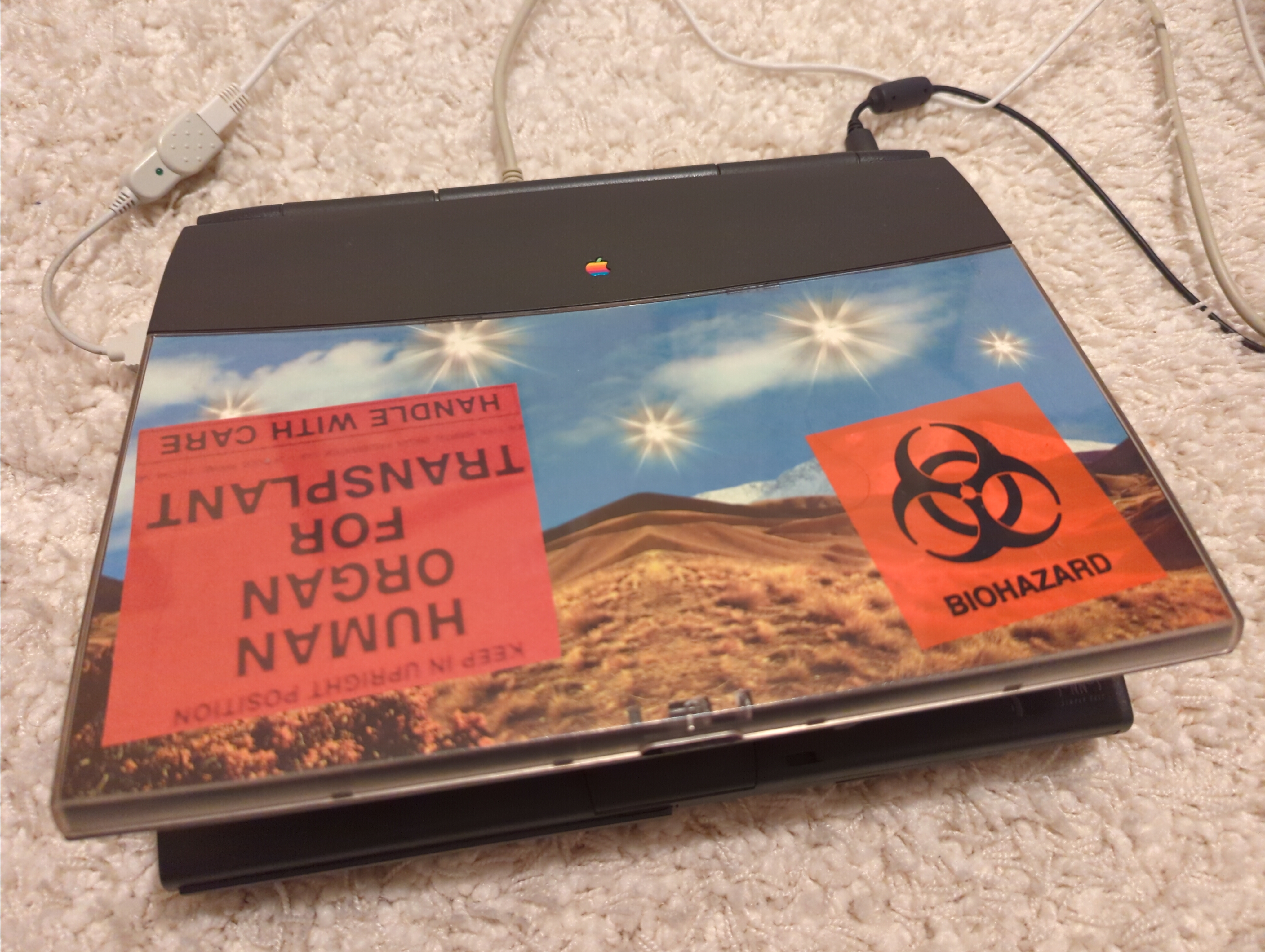
Plus, those delightful swappable covers!